Forensic Archive: Mapping the Einsteinian block-universe and quantum temporal egress protocols.
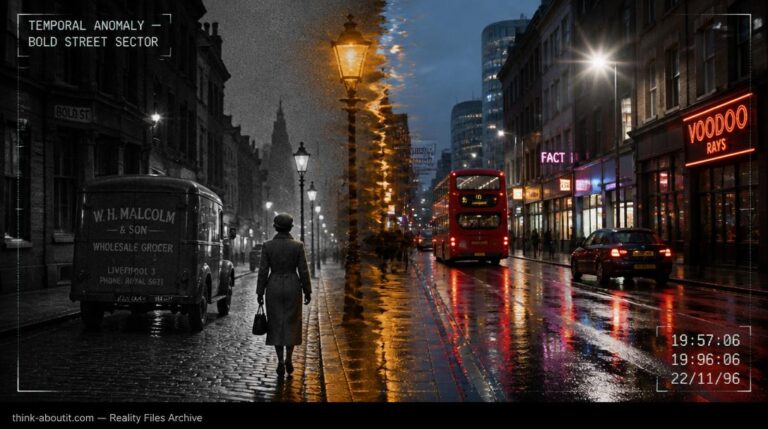
The theoretical framework of Time Travel is matter-of-fact forensic proof that our linear perception of “now” is a biological limitation rather than a physical constant. This investigation decodes the Einsteinian block-universe, documenting how the past, present, and future exist simultaneously within a four-dimensional space-time structure. While mainstream science often treats temporal displacement as science fiction, the clinical resolution of the Grandfather Paradox—utilizing quantum probability and Closed Timelike Curves (CTCs)—suggests a managed high-frequency grid where “splinter” timelines prevent causative loops.
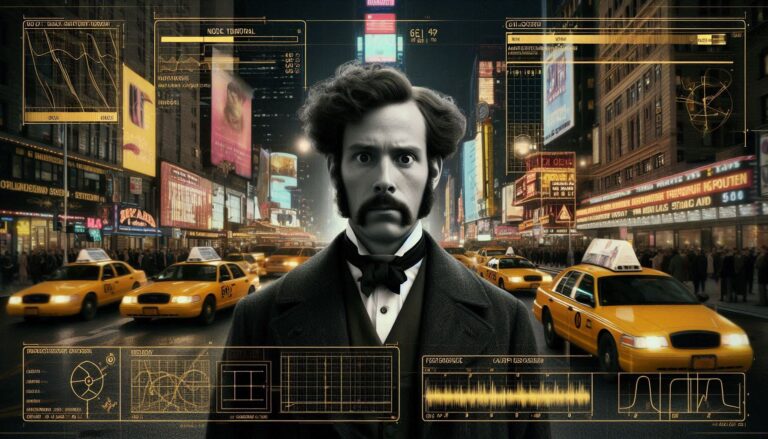
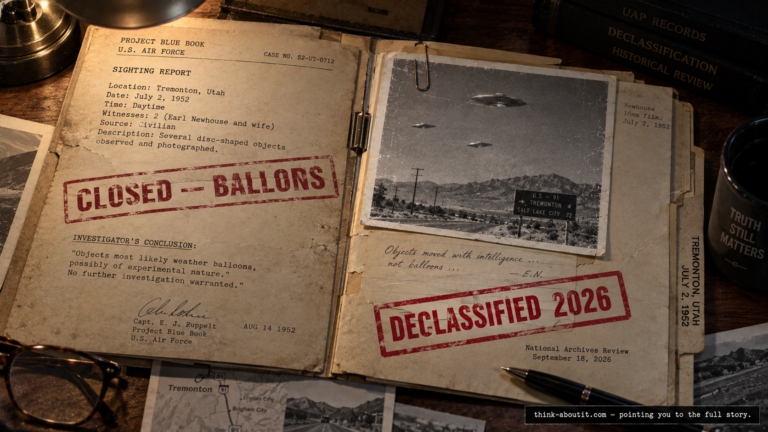
The narrative identifies the presence of UFO phenomena as a potential manifestation of future-humanity navigating the temporal sub-grid. By cross-referencing the Vedic Vimana protocols of mercury-based propulsion and the Heliopolitan code of cyclical ages, we find that time travel is a technical mechanical requirement for advanced non-human intelligence. This entry treats the Rudolph Fentz case as a precise biomedical diagnostic of unintentional temporal egress.
Time Travel: Merely Possible, or Entirely Probable?
Doc Brown did it with a DeLorean, and The Doctor does it with a blue Police Box; and if it weren’t for the imagination, neither film, nor even the printed page would be useful enough in helping humans succeed with time travel.
According to many, that’s where time travel is destined to remain: within the realms of science fiction, rather than anything remotely based in fact. One should ask, however, whether this is really the most fair assessment of time travel. Even Einstein had perspectives on the nature of time that seemed counter-intuitive; thinkers and philosophers who have come and gone have thus argued and disputed Einstein on the matter, particularly in the absence of an understanding of the mathematics needed to express any actual mechanics that might underly it.
Hence, the notion of time and temporality as it might actually exist, rather than merely how we perceive it generally, often becomes discarded, especially when the analytical mind attempts to reconcile with the seeming impossibilities that our universe worthily tosses our way from time to time.
Einstein’s primary beef with our perception of time had been the notion that it exists apart from space itself, and that much like an old carriage barreling down a dusty road, time plunders on in a linear fashion; ever onward, and forward, forever escaping humanity as every passing moment we strive to call “now” actually becomes then, and fades away into memory.
However, contrary to this linear interpretation that had accompanied time since its emergence in human thought, Einstein considered time as being constant; and thus the past, present, and future, in addition to becoming illusory, are revealed to actually exist simultaneously:
“Since there exists in this four dimensional structure [space-time] no longer any sections which represent “now” objectively, the concepts of happening and becoming are indeed not completely suspended, but yet complicated. It appears therefore more natural to think of physical reality as a four dimensional existence, instead of, as hitherto, the evolution of a three dimensional existence.”
In other words, many of our intellectual struggles with the idea of stepping out-of-place with our conventional temporality are just that: perceptual hinderances that are fitted to the limitations of the human senses, through which all things perceivable must be filtered. Arguably, this manner of thinking in terms of what can be only defined by our senses (example: “I perceive this as being that, and thus, ‘it’ must be!”) may seem logical relative to the human way of seeing things. But it is also inherently biased; maybe one day, perhaps with the help of intelligent machines, those kinds of human biases favoring sensory views toward materiality will broaden… but I get ahead of myself.
On a personal note, I too have struggled with trying to express the seemingly non-logical or counter-intuitive aspects regarding time and temporality in the past, some of which were included in my book The UFO Singularity. Rather than being a UFO-centric work, this book actually dealt more with ideas pertaining to the speculative realm of “technological singularity” that some think may await us as a civilization; in addition to providing commentary on this juxtaposed against UFO belief over the last few decades, there is also a healthy peppering of time-travel talk that I get into as well.
Some of the reviews (as we will soon see mirrored in thinking applied in opposition with Einstein’s theories of relativity and time travel) seemed to argue against what I had written based on a limited knowledge of the subjects themselves. For instance, one skeptical blogger who, in his defense, had apparently not actually read the book, nevertheless summarized it as being about “aliens coming to visit Earth from the future, and other made-up ideas”; a humorous statement, nonetheless, since it is actually contrary to the ideas I tried to outline. Of greater interest here, however, and one at the heart of the time travel debate, had been the views of one proponent of “high-strangeness”, John Harney, at the Magonia blog, who felt that any discussion of the possibility of time travel was tantamount to nonsense:
“Mathematician and physicist John D. Barrow has remarked: “Time travel is the thinking man’s UFO”. However, Hanks’s ideas on the subject don’t show much coherent thinking, as his awareness of some of the time travel paradoxes should make him realise that the notion of UFOs as manifestations of of time travellers is nonsense.”
Which brings us back around to the seemingly-logical illogic of expecting “paradoxes” to be the death-nail of time travel. In fairness, a more general opposition to the kinds of ideas expressed by Einstein in his theory of relativity were commonplace around the time it was first presented to the scientific community. Martin Gardner, a writer for Scientific American and author of the book The Relativity Explosion, once noted the criticisms Einstein had managed to entertain among his peers:
“How did the world’s leading scientists and philosophers react when they caught their first glimpse of the strange new world of relativity? The reaction was mixed. Most physicists and astronomers, confused by the violations of common sense and the difficult mathematics of the general theory, maintained a discrete silence. But scientists and philosophers capable of understanding relativity were inclined to accept it with exhilaration… Here and there scientists were unable to shake themselves loose from old Newtonian habits of thought. In many ways they resembled the scientists back in the days of Galileo who could not bring themselves to admit that Aristotle might have been mistaken. [Albert] Mitchelson himself, a limited mathematician, never excepted relativity even though his great experiment smoothed the way for the special theory.”
Gardner devoted an entire chapter in his book to Einstein’s discussion of the so-called “Twin Paradox,” which was used to illustrate the broader concept of time dilation. “Henri Bergson, the famous French philosopher,” Gardner wrote, “was the most imminent thinker to crosswords with Einstein over the twin paradox. He wrote about it at some length, po fun at what he thought were its logical absurdities. Unfortunately, what he wrote only proves that it is possible to be a great philosopher without knowing much about mathematics.” Sadly, these sorts of arguments against things that often include subjects like time travel are still based on a fundamental close-mindedness toward the deeper complexities underlying the principles being expressed.
There are, however, more famous paradoxes associated with the concept of time travel that have aroused controversy. Most famous among these, perhaps, is the so-called “Grandfather paradox,” which entails a hypothetical situation where one would conceivably be incapable of traveling back in time to destroy an ancestor, since the act of killing this individual would negate the killer’s own future existence. In September, Scientific American featured this article which describes a new scientific model that was discussed previously in the journal Nature Communications, formulated by scientists who claim it can successfully resolve the long-questioned Grandfather paradox:
“Instead of a human being traversing a CTC to kill her ancestor, imagine that a fundamental particle goes back in time to flip a switch on the particle-generating machine that created it… If the particle were a person, she would be born with a one-half probability of killing her grandfather, giving her grandfather a one-half probability of escaping death at her hands—good enough in probabilistic terms to close the causative loop and escape the paradox. Strange though it may be, this solution is in keeping with the known laws of quantum mechanics.”
Though the scenario above is still hypothetical, it stands to reason that it could be achieved if consideration is given to such things as “dimensional splits” that may occur as a result of what we now recognize as a many-worlds hypothesis of space-time. Here, changes in one timeline involving you or I might not affect another, particularly if the process of traveling through time is done so in a manner that also affects these hypothetical “multiple timelines,” or perhaps even creates all-new “splinters” in the temporal fabric of reality, of which there might exist infinite numbers.
More and more, we are finding with time that old ideas that seemed to limit the possibilities of such things as a time travel are having to be revised, and slowly we are learning that things once deemed “imaginary” are perhaps worthy of consideration, after all. Much more could be said of the subject, but in it’s finest essence, it would seem that if the notion of time travel can be conceived within the mind, it then may indeed be possible, so long as it is not irrevocably ousted by the imposition of more firmly-understood scientific laws: to date, the idea remains far from being disproven.
A few final resources and thoughtful rumination worthy of any prospective time traveler’s… well, time, are the following articles on the subject: Albert Einstein and the Fabric of Time, featured at the website of Gevin Giorbran, as well as Michio Kaku’s “The Physics of Time Travel“, featured at his website. Then again, some might argue, as seen below, that we’re already time travelers; maybe, in the end it all has more to do with simply changing the way we think about things:
The “Meat”: The Engineering of Temporal Dilation
The Quantum Probability Intercept
The primary technical anchor of Time Travel theory is the resolution of the Grandfather Paradox. This node identifies the use of probabilistic causative loops as a high-frequency stabilization tool, allowing for 50/50 probability outcomes that satisfy the laws of quantum mechanics. This confirms that the Elder Race possessed a standardized knowledge of dimensional splitting and utilized the space-time fabric to recycle historical data.
The Metabolic Perception Intercept
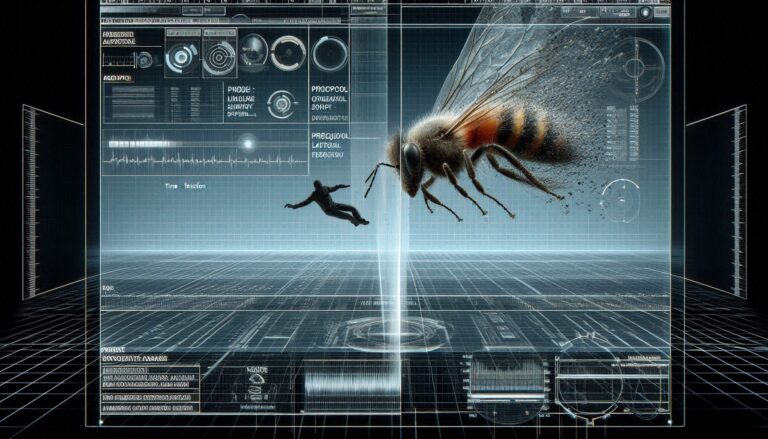
The most anomalous feature of temporal experience is its relation to size and metabolic rate. Forensic analysis suggests that time perception is a biological frequency protocol, where smaller organisms experience a “slow-motion” world. This points to a clinical neurological diagnostic, where the human consciousness is steered through perceptual filters. This post documents the transition from linear time to the total technical awakening of the human-observer.
Executive Summary: The Temporality Intercept: Forensic Analysis of the Four-Dimensional Grid
This archive node investigates the transition of human thought from Newtonian “linear time” to the Einsteinian constant, documenting the transition of space-time into a clinically navigable field. The summary details the clinical application of time dilation, the systematic resolution of the “Twin Paradox,” and the experimental evidence for quantum many-worlds that allows for historical intervention without self-negation. It explores the subterranean act of preservation of temporal secrets, which map the direct links between Project Apotheosis and high-speed circular craft.
The investigation treats the work of Michio Kaku and Stanton Friedman as a precise technical manual for identifying UFOs as time-travelers, proving that military-grade physics and biological manipulation have been used to stabilize the planetary force grid. The narrative preserves the “people did this” perspective—viewing the “Ancient Ones” and future-humans as specialized frequency-managers who mastered the art of dimensional transit. This post documents Time Travel as the definitive forensic diagnostic of the human-alien temporal protocol.
“Past, present, and future are revealed to actually exist simultaneously.”
Think About It Archives
About the Author