Digital Archive: The ritual use of psychotropic substances in Early Mesoamerican history.
Long before modern pharmacology, the ancient civilizations of Mesoamerica—including the Maya and Olmec—mastered a complex array of psychotropic substances for ritual and religious use. From the potent secretions of the Bufo toad to the widespread use of psilocybin mushrooms, these cultures utilized altered states of consciousness to communicate with the divine. This North America History entry examines the tactical application of these substances, including the “devil’s herb” toloache and the fermented mead known as balché.
By analyzing reports from researchers like Francisco Javier Carod-Artal, we uncover the specific, often extreme methods used to administer these compounds. Whether through ceremonial smoking or psychedelic enemas, the pre-Columbian inhabitants of central Mexico and Central America were far more advanced in their understanding of botanical chemistry than traditional history suggests.
Early Mesoamericans Got High on Toads and Enemas
December 11, 2014 December 23, 2014
The America’s History
Before Europeans first came to Mesoamerica ? the region covering what is now central Mexico, Belize, Guatemala, El Salvador, Honduras, Nicaragua, and northern Costa Rica ? the area was a hotbed of heads high on herbs, plants, toads and enemas. That?s according to Francisco Javier Carod-Artal of Hospital Virgen de la Luz in Cuenca, Spain, whose report in the December issue of the journal Neuralgia details the many common and unusual psychotropic drugs used by the native peoples in pre-Columbian times and which ones are still used today.

Starting with the most popular, the study found at least 54 hallucinogenic mushrooms used by pre-Columbian Mesoamerican cultures dating back to at least 3,500 years ago. Mushrooms containing psilocybin are still taken today, although not as often for the religious experience. The same is true for peyote, a cactus that contains over 60 hallucinogenic compounds including the ever-popular mescaline. The study found evidence of peyote use dating back over 5,000 years.
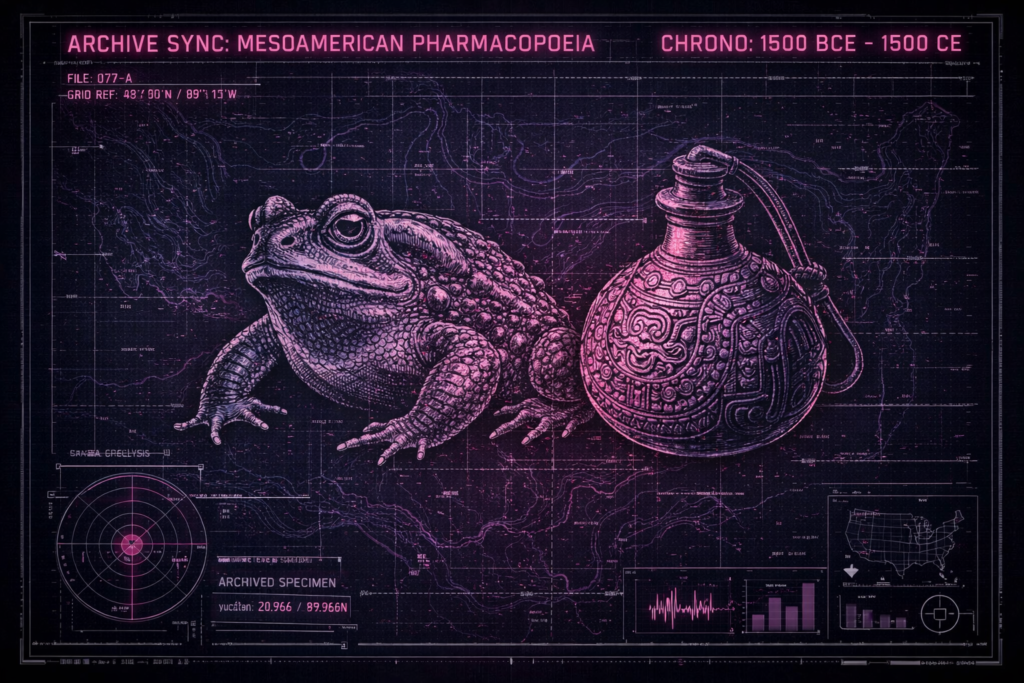
Moving to the more unusual is the partaking of the dried skins of some Bufo toads, which contain psychoactive bufotoxins.
The report says the skins were mixed with tobacco and alcohol for a drink with an extra kick ? a recipe still used by Mayans for their balché.
Balché normally refers to the fermented mead-like drink made from the bark of a leguminous tree and sometimes mixed with honey made by bees that visited a psychedelic species of morning glory.
Just like today, balché drinkers imbibed while smoking tobacco.
Unlike today, they sometimes mixed everything together in gourds and gave themselves psychedelic enemas.
Finally, Carod-Artal talks about toloache, the so-called ?devil?s herb? that was brewed into a conscious-altering tea. Fans of ?Indiana Jones and the Temple of Doom? will recognize the effects as described in the report.
It has been hypothesized that during ritual human sacrifices, some prisoners and those people that would be sacrificed were drunk with some consciousness-altering beverages, probably ones including toloache.
Toads, enemas, psychedelic honey, human sacrifice warm-ups ? those early Mesoamericans would definitely have been bored with electric Kool-Aid.
Executive Summary: Ritual Psychotropics and Sacred Substances
The use of hallucinogenic mushrooms in Mesoamerica dates back at least 3,500 years, with peyote usage extending over five millennia. These substances were not merely for recreation but were central to the religious experience and were often utilized during ritual human sacrifices to alter the consciousness of both the prisoners and the priests. The study of these strange places and practices reveals a deep integration of psychedelic ecology into the social and political structure of ancient states.
One of the most unique aspects of Mesoamerican pharmacopoeia was the use of bufotoxins derived from dried toad skins, often mixed with tobacco and alcohol. These potent cocktails were sometimes administered via specialized gourds for rapid absorption. This entry serves to archive the botanical and chemical history of these indigenous ways, preserving the record of an era where “electric Kool-Aid” would have seemed tame compared to the ritual reality of the Maya.
“Toads, enemas, psychedelic honey, human sacrifice warm-ups—those early Mesoamericans would definitely have been bored with electric Kool-Aid.”
About the Author