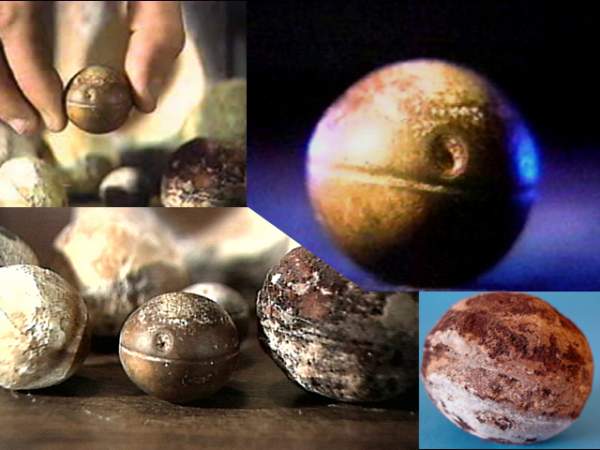
Deep within the pyrophyllite mines of Ottosdal, South Africa, miners have unearthed objects that shouldn’t exist. Known as the Klerksdorp spheres, these small, metallic orbs are found in rock strata dating back 3 billion years—a time when the only life on Earth was simple algae. Featuring precise parallel grooves and a hardness that resists scratching even by steel, these spheres have sparked a fierce debate: Are they a rare miracle of geology, or are they the discarded manufactured artifacts of a civilization that predates humanity by eons?
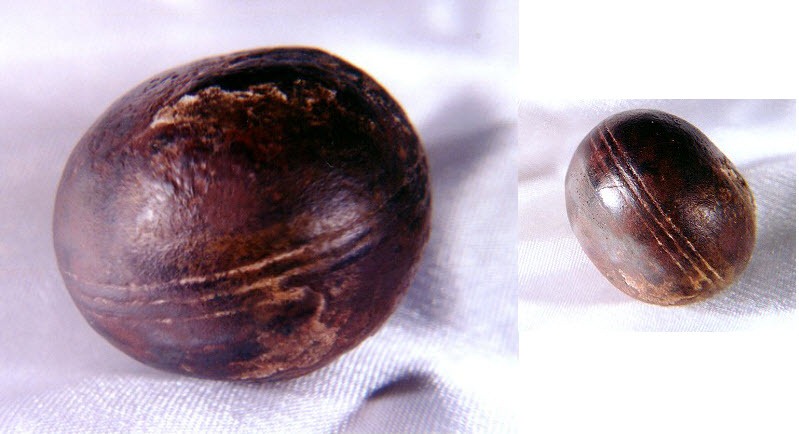
3 billion year old manufactured sphere
A balanced and concentric ringed mystery spheroid
The riddle of the rotating spheres ? Stones baffle NASA scientists”
Man and rock. Stones, which are billions of years old and rotate on their axes, captured the attention of Mr. John Hund of Pietersburg fifteen years ago. Review previously published reports about Hund’s journey to the Gestopte Fontein mine near Ottosdal in the Northern Province where he found a stone just like the one he read about and saw in the Klerksdorp museum.
While playing with the stone on a very flat surface at a restaurant one day, Hund realized it was very well balanced. He took it to the California Space Institute at the University of California to have tests done to determine just how well balanced it was. “It turned out that the balance is so fine, it exceeded the limit of their measuring technology and these are the guys who make gyrocompasses for NASA.
The stone is balanced to within one-hundred thousandths of an inch from absolute perfection,” explains Hund. Nobody knows what these stones are. One NASA scientist told Hund that they do not have the technology to create anything as finely balanced as this. He said the only way that either nature or human technology could create something so finely balanced would be in zero gravity.
Here is an extract of Mr. Hund’s letter:
The existence of the sphere came to my attention ca 1977 while removing endangered rock engravings from the site where pyrophyllite or “wonderstone”, as it is commonly known in the region, is mined on the farm Gestopte Fontein (meaning plugged fountain) near the little village of Ottosdal about 110 km from Klerksdorp in South Africa’s Northwest Province.
I was intrigued by the form of the spheres, grooves around the middle and the fact that they are as hard as steel, while the material (pyrophyllite) in which they are found, is as soft as limestone with a count of only 3 on the Moh scale.
As you probably know, pyrophyllite (Al2 Si4 O10 (OH)2) is a secondary mineral and the deposits were formed by a process of sedimentation. On Gestoptefontein volcanic activity was responsible for the forming of outcrops varying in height from about 10 to 100 meters. The smooth and relatively soft surface on the slopes were ideal for the prehistoric dwellers (San) to make their engravings of animal and abstract designs.
On Gestoptefontein these outcrops were “swan” into huge pieces by means of twisted steel cables running zig-zag on pulleys for several kilometers. These blocks were then sawn by the same method into more manageable pieces of about 500 x 500 mm. Occasionally the “sawing cable” got stuck on one of the metal spheres embedded in the pyrophyllite.
They vary in size from ” 30 ? 50 mm in diameter and have perfectly concentric grooves round the center as if they were molded. Inside the hard “shell” some have a spongy substance, while in others it resembles charcoal.
When only partly embedded so that they can be seen on the surface, they are not all spheres, but some are also oblong in form.
According to Professor Andries Bisschoff of the University of Potchefstroom (retired some years ago) they are limonite concretions. Due to the relative scarcity of the spheres and the almost impossibility for outsiders to obtain samples from the mine, his conclusions have not been verified by other scientists.
It is very strange that the grooves are always and only round the center. Mr. Credo Mutwa, a notorious witch doctor from the city of Soweto was brought to the museum by a TV ? team some years ago and he as well as some amateur archaeologists believed the spheres to be from outer space. It is also hard for me to believe their theory. The original sphere exhibited in this museum was stolen by a white sangoma (witch ? doctor) – not Mr. Mutwa, for its supposedly magic qualities and was never retrieved.
Inquiries were made from all over the world about this phenomenon. Countries include Canada, Switzerland, Denmark, Germany, England, USA, Norway, France and Botswana. Institutions such as the University of South Florida, Miles Price and Associates, the Society for Physic Advancement (S.A), Kokkolan Kaupunchi (Finland), Esotera (Germany) Geologisches Institut der Universiteit Pleicherwall (Germany), the Department of Philosophy UICC (Chicago), Danfoss (Denmark), Illustreret Videnskab (Coppenhagen), Louisiana Geological Survey, Gale Research Company (Michigan) and Search and Research Institute of Florida also made inquiries.
I wrote NASA HQ, to confirm or deny this in 2000, and never received a reply. Mr. Hund’s letter was removed from the Klerksdorp Museum page, afterwards, when I checked back some time later, and the page re-designed.
Concretion vs. Artifact: The Great Debate
Conclusion: A Challenge to Time
The Klerksdorp spheres remain one of the most stubborn mysteries in the field of forbidden archaeology. Whether they are a unique geological fluke or the 3 billion-year-old remains of a prehistoric “manufactured” technology, they force us to reconsider the timeline of our planet. As we continue to find objects that defy our understanding of the Precambrian era, we must ask: Is our history a straight line of progress, or are we living in the shadow of giants who walked the Earth billions of years ago?
FAQ for “3 Billion Year Old Manufactured Sphere”
Q: What exactly are the Klerksdorp spheres?
A: They are small, slightly flattened spheres, usually about 1 to 4 centimeters in diameter. They often feature three parallel grooves etched around their “equator.” They are made of hematite or wollastonite and were found in a mineral called pyrophyllite.
Q: Does science explain them as natural formations?
A: Mainstream geologists argue they are concretions—masses of mineral matter that formed naturally as sediments settled. However, critics point out that the perfect balance and the precise, etched grooves are highly unusual for natural concretions, which are typically irregular in shape.
Q: Is it true that one of the spheres rotates on its own?
A: There is a famous story that a sphere in the Klerksdorp Museum was found to be rotating spontaneously in its display case. While museum curators noted the movement, skeptics suggest it was likely caused by vibrations from the building’s floor or air currents rather than internal energy or magnetism.
Q: How hard are these spheres?
A: According to Roelf Marx, a former curator of the Klerksdorp Museum, the spheres are extremely hard and cannot be scratched by a steel point. This high level of durability adds to the theory that they may be manufactured from an advanced metallic alloy.